
 Let’s Talk
- By Pet-Tek Australia
- August 31, 2026
- No Comments
How Much Does It Cost to Install a Pet Door in Glass in Australia?
Home › Guides › Installation & Fitting › Cost to Install a Pet Door in Glass
How Much Does It Cost to Install a Pet Door in Glass in Australia?
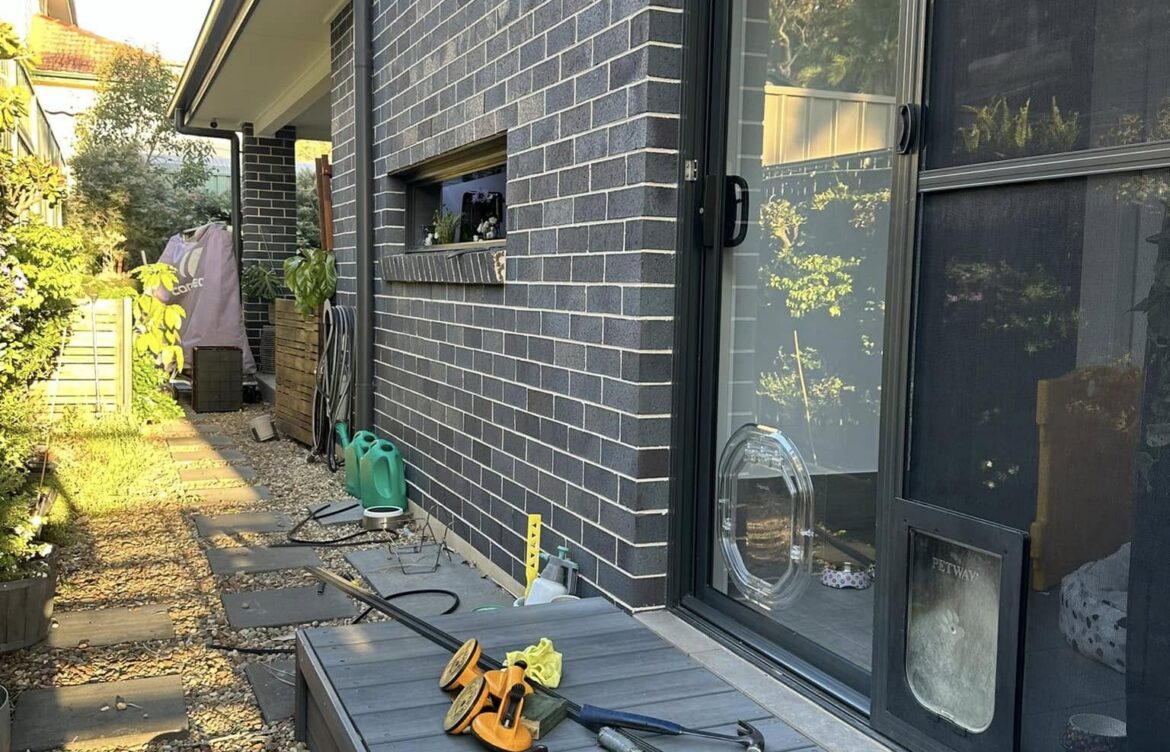
A pet door in glass costs $450 to $1,200 all up in Australia, glazed into an existing window or sliding door. The door itself is the small part — $55 to $132. The rest is the replacement glass panel and the glazier's labour, because in almost every case the glass has to be replaced rather than drilled.
That last sentence is the one that surprises people, so let's start there.
Why you're usually buying new glass, not a hole
Most Australian homes built or renovated in the last thirty years use toughened (tempered) safety glass in doors and in windows below a certain height. It's a building code requirement, and it's a good one — toughened glass shatters into blunt granules instead of blades.
The catch is that toughening happens in a furnace at the end of manufacturing. Once a panel has been through it, the glass is under enormous internal tension. Drill it, cut it, or nick the edge and it doesn't crack — it explodes into thousands of pieces. There is no tool and no technique that gets around this.
So the sequence for a toughened panel is: measure, order a new panel with the pet door hole already cut, wait for it to be toughened, then swap the panel and fit the door. That's why the glass is the biggest line on the quote.
The actual numbers
| Line item | Typical range | What moves it |
|---|---|---|
| The pet door unit | $55 – $132 | Cat door at the low end, large dog door at the top. Dual glaze models cost more than slimline. |
| Replacement glass panel | $220 – $650 | Panel size, single vs double glazing, toughened vs laminated, clear vs tinted |
| Cutting the hole (in the new panel) | $60 – $140 | Usually bundled into the panel price |
| Glazier labour — removal & refit | $150 – $350 | Ground floor vs upstairs, sliding door vs fixed window, access, whether two people are needed |
| Core-drilling existing annealed glass instead | $180 – $320 | Only possible on non-toughened glass |
| Call-out / travel | $0 – $120 | Metro vs regional |
Three realistic scenarios
| Situation | Door | All-up cost |
|---|---|---|
| Cat door into an older annealed side window, core-drilled in place | G-CDW Original Cat Door | $280 – $420 |
| Medium dog door into a toughened sliding door panel, panel replaced | G-DDW Dog Door | $650 – $1,000 |
| Cat door into a double glazed unit, IGU remade | G-SDDC Maxi Dual Glaze | $800 – $1,400 |
Double glazing is the priciest because you aren't replacing a sheet of glass — you're having a whole insulated glass unit remade, with both panes cut, the spacer bar re-run around the new opening, and the unit resealed. Not every glazier does this in-house. We go through that job in detail in fitting a cat door into double glazing or toughened glass.
The hidden cost most people don't budget for
Cut-out size. Every glass fitting pet door needs a specific hole diameter, and the diameter has to be right before the panel is toughened. Get it wrong and you're buying the panel twice.
| Model | Suits | Cut-out | Glass thickness |
|---|---|---|---|
| G-CD Original Cat Door | Cats of all sizes | 245 mm dia | 3 – 10 mm, single glazing |
| G-SDDSL Maxi Slim Line | Large cats, small dogs | 267 mm dia | 3 – 21 mm |
| G-SDD Maxi Dual Glaze | Large cats, small dogs | 267 mm dia | 3 – 28 mm, single and double |
| G-IDDSL Intermediate Slimline | Small to medium dogs | 320 mm dia | 4 – 13 mm |
| G-IDD Intermediate Dual Glaze | Small to medium dogs | 320 mm dia | 4 – 32 mm |
| G-DD Dog Door | Medium to large dogs | 385 mm dia | 3 – 32 mm |
Give your glazier the model code and the cut-out diameter in writing before they order anything. Every Catwalk® and Dogwalk® product page lists both, and our cut-out sizes and trade specifications page has every model on one sheet you can forward straight to them. If you're not sure which model you need, our Find Your Fit tool asks four questions and returns the exact cut-out figure to hand over.
Browse glass fitting cat doorsBrowse glass fitting dog doors
Where the money is worth spending
The glazing cost is fixed regardless of which brand of door goes into the hole. That changes the calculus completely: a $60 door and a $130 door sit in the same $700 job. Saving $70 on the unit and then paying a glazier again in three years because the flap cracked is a poor trade.
Three things are worth paying for:
- Flap material. High-impact polycarbonate, UV stabilised. Cheap flaps go milky and brittle under Australian sun — usually within two summers on a north or west elevation.
- How the water gets out. Catwalk and Dogwalk doors are built with internal draft angles that drain water out of the door body rather than letting it pool inside. If an installer offers to silicone the base channel closed, decline — it traps water instead of releasing it.
- The seal, and a light closing action. The flap-to-body gap is machined to a near-zero tolerance and runs a full brush seal. Closing force is calibrated deliberately light so a cat can push through comfortably. Crank the closing force up and you get a door your cat refuses to use.
Getting a quote that's actually comparable
- Photograph the panel from inside and outside, including any etched safety-glass stamp in the corner.
- Measure the panel width and height, and the glass thickness at the edge if you can reach it.
- Decide the model first, then send the glazier the model code, cut-out diameter and glass thickness range.
- Ask three specific questions: is the glass toughened or annealed; will you drill in place or replace the panel; is the new panel price included.
- Get it in writing, itemised. A single lump-sum figure is impossible to compare between quotes.
Fitting a Catwalk or Dogwalk door needs no special training and no brand-specific parts — any licensed glazier can do it with tools already in the van. If you'd rather start with someone who has done it before, our installer directory lists independent fitters across Victoria, NSW, Queensland and WA.
Common questions
Can a pet door be installed in an existing glass door?
Only if the glass is annealed. If it's toughened — which most modern Australian doors are — the panel has to be replaced with one that had the hole cut before toughening.
How much does it cost to install a pet door in glass in Australia?
$450 to $1,200 for a typical toughened panel replacement. $250 to $400 if the existing glass is annealed and can be core-drilled in place.
Is it cheaper to put a pet door in a timber door instead?
Considerably. A wood fitting door is a DIY job with a jigsaw and the supplied template, so you pay for the unit only — $55 to $132. If you have a suitable timber, uPVC or metal door, that's the cheaper path by a wide margin.
How long does it take to install a pet door in glass?
Measuring takes 15 minutes. Toughened glass is then typically 5–15 working days at the fabricator. The fit itself is usually under two hours.
Do I need council or strata approval for a pet door?
Not for a standalone house. In a strata or body corporate property, altering glass in a common-property window or door usually does require written approval — check your by-laws before you order.
Will a glass pet door leak?
A correctly fitted glass pet door shouldn't. The door clamps both faces of the glass and seals against it, and the body is designed to drain water outward rather than hold it. Leaks almost always trace back to a cut-out that was made oversize.