
 Let’s Talk
- By Pet-Tek Australia
- August 31, 2026
- No Comments
Dog Doors for Sliding Glass Doors: What Actually Works in Australia
Home › Guides › Installation & Fitting › Dog Doors for Sliding Glass Doors
Dog Doors for Sliding Glass Doors: What Actually Works in Australia
Dog doors for sliding glass doors come three ways: a glazed-in pet door in a replacement panel (best long-term, $650–$1,000), a panel insert that sits in the track (renter-friendly, $300–$600, but you lose door width), or going through the adjacent wall instead (often the cheapest and most overlooked). Which one is right depends almost entirely on whether you own the place.
Sliding doors are the most common place Australians want a dog door, and the most awkward. The panel moves, the glass is nearly always toughened, and the frame is usually aluminium with very little meat in it. Here's how each option actually behaves.
Option 1 — Glazed into the sliding panel
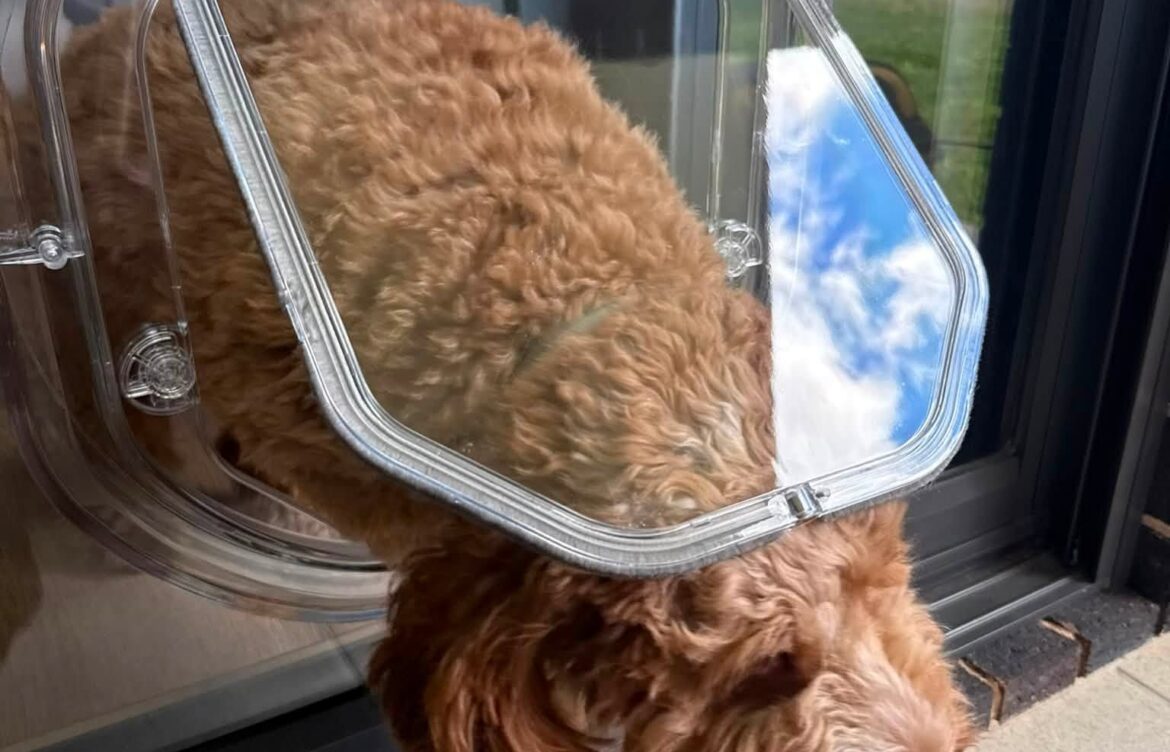
The door is fitted into a round hole in the glass itself, usually in the fixed panel rather than the moving one. It's the option that looks like it was always meant to be there, and it's the one that lasts.
| Works well | Watch out for |
|---|---|
| Nothing protrudes into the doorway or the track | The glass panel almost always has to be replaced, not drilled |
| Full door width retained — no lost opening | 5–15 working days for toughened glass to be made |
| Weather sealing is proper, not improvised | Permanent. Not an option in a rental. |
| No effect on how the door slides or locks | Strata approval usually required in apartments |
Fit it into the fixed panel wherever the layout allows. A pet door in the sliding panel moves every time the door opens, which means the outside of the flap is sometimes indoors — awkward for weather sealing and confusing for the dog.
Which model for which dog
| Model | Flap (W × H) | Cut-out | Glass | Suits |
|---|---|---|---|---|
| G-DDW / G-DDC dog door | 270 × 313 mm | 385 mm dia | 3 – 32 mm | Medium to large dogs |
| G-IDDW / G-IDDC intermediate dual glaze | 216 × 250 mm | 320 mm dia | 4 – 32 mm | Smaller dogs and large cats; takes double glazed units |
| G-IDDSLW / G-IDDSLC slimline | 216 × 250 mm | 320 mm dia | 4 – 13 mm | Same flap, slimmer body for thinner single glazing |
| G-SDDC / G-SDDW maxi | 187 × 203 mm | 267 mm dia | 3 – 28 mm | Large cats and small dogs |
Note the cut-out column — every model’s diameter is set out on our cut-out sizes and trade specifications page. That number has to reach the glass fabricator before the panel is toughened, because toughened glass cannot be cut afterwards. If you're not certain which model suits your dog and your glass, the Find Your Fit tool returns the exact figure to hand over. We also break down what the whole glazing job costs in Australia line by line.
See the glass fitting dog door range
Option 2 — A panel insert in the track
A tall aluminium panel with a pet door built into it drops into the slider track, and the door closes against it. Popular because it's reversible.
| Works well | Watch out for |
|---|---|
| No glass work at all — installs in an afternoon | Permanent loss of door width |
| Removable, so renters can take it with them | Weather sealing at the top and side is never as good as glazed-in |
| No strata approval needed in most cases | The security bar or lock often has to be reconfigured |
| Cheaper up front | Visibly an add-on; affects resale appeal |
Option 3 — Through the wall beside the door
Frequently the best answer and the one people forget. If there's a stud wall or a brick wall next to the slider, a tunnel-model pet door through it avoids the glass problem completely.
- No glass replacement, no fabrication wait
- Full door width retained
- Weather sealing is straightforward
- Usually cheaper than replacing a toughened panel
The tunnel models — W-CDTW / W-CDTB for cats and W-SDDTW / W-SDDTB for small dogs — handle panel and wall thicknesses from 11 mm right up to 52 mm, which covers most single-brick and stud-wall situations. Thicker walls need an extension.
Australian-specific things that catch people out
Almost all of it is toughened
Australian building standards require safety glass in doors and in most glazing below 500 mm. In practice that means your sliding door is toughened, and toughened glass cannot be drilled. Look for a small etched stamp in a bottom corner. If your slider is double glazed, that's a different job again.
Aluminium frames don't take a pet door
The frame section on a typical Australian slider is far too narrow, and cutting it compromises the structure. The door goes in the glass or in the wall — never the frame.
You probably have a security screen too
Most Australian sliders sit behind a screen. Solving the glass and forgetting the screen leaves your dog with a door it can't reach. Plan both together — we cover pet doors and security screens separately, because the answer is different.
Wind is a real design constraint here
An exposed patio slider in a coastal or hilltop location will push a flap open in a strong gust. This is true of every flap door on the market, not a fault of any one brand — in genuine wind-tunnel conditions no flap stays shut. The fix is an external wind deflector or hood to break the pressure, plus the "in only" lock setting during storms. It is not a heavier closing action. Crank the closing force up and the door becomes too hard for the animal to use, which defeats the whole point.
Renting or in strata?
Glazed-in is out unless the owner or the body corporate signs off in writing. The panel insert exists for exactly this situation. If there's a suitable timber or metal side door, a wood fitting model is often the easier permission conversation and can be plated over on exit.
Choosing between the three
All three approaches to dog doors for sliding glass doors work. The right one is decided less by the dog than by whether you own the property, how wide the opening is, and what sits beside it.
| Your situation | Best option |
|---|---|
| Own the home, staying put, want it to look right | Glazed into the fixed panel |
| Renting | Panel insert, or a wood fitting door in a side door |
| Apartment or townhouse with strata | Panel insert — approval is far simpler |
| Suitable wall next to the slider | Through the wall with a tunnel model |
| Narrow slider under about 1.6 m | Avoid the insert; glaze in or use the wall |
| Very exposed, windy site | Glazed-in plus an external deflector |
Whichever route you take, any qualified glazier can fit a Catwalk or Dogwalk door — there's nothing proprietary about the installation. Our installer directory lists independent fitters across Victoria, NSW, Queensland and WA if you'd rather start with someone who has done it before.
Common questions
Can you put a dog door in a sliding glass door?
Yes — three ways: glazed into a replacement glass panel, via a panel insert in the track, or through the adjacent wall. Drilling the existing panel is only possible if the glass is annealed rather than toughened.
Does a pet door weaken a sliding door?
No. A correctly sized, professionally glazed pet door in a purpose-cut panel doesn't compromise the panel's strength — the hole is made before toughening and the door clamps and seals both faces.
Should a pet door go in the fixed panel or the sliding panel?
The fixed panel, wherever the layout allows. A pet door in a moving panel changes position every time the door opens.
How much door width does a pet door panel insert take up?
Typically 20–30 cm, permanently. Measure your clear opening before ordering.
What size dog fits a G-DDW dog door?
The G-DDW has a 270 × 313 mm flap and suits medium to large dogs — most Labradors and Golden Retrievers fit comfortably. Measure your dog's widest point to be sure, and remember fitting height matters as much as flap size: the bottom of the flap should sit at or just below the chest.
Will a dog door in a sliding door let draughts in?
Far less than people expect. The flap-to-body gap is machined to a near-zero tolerance and runs a full brush seal around the flap, and the four-way locking dial lets you close it off entirely overnight or in bad weather.