
 Let’s Talk
- By Pet-Tek Australia
- September 2, 2026
- No Comments
How to Train Your Pet to Use a Pet Door
Home › Guides › Living With a Pet Door › Training Your Pet to Use It
How to Train Your Pet to Use a Pet Door
Most animals are using a new door confidently within a week, and the method to train your pet to use a pet door is the same for dogs and cats: prop the flap fully open first, reward every crossing, then lower the flap in stages over several days. Before you start any of it, rule out the physical causes — roughly half the "won't use it" cases we hear about turn out to be a height or sizing problem, not a training one.
First, check it isn't the door
Work through these before you spend a week training against a problem no amount of treats will fix.
| Check | What good looks like | If it's wrong |
|---|---|---|
| Flap height off the floor | Bottom of the flap level with, or just below, the bottom of the chest | Too high and they have to climb; too low and they crouch. Both cause refusal. |
| Flap size | Within the published range for that model — each door lists the animal it suits | An animal that has to squeeze stops trying |
| What's on the other side | Level, dry, non-slip landing | A drop, a step, or slippery tiles will stop a cautious animal cold |
| The lock setting | Four-way dial set to open both ways during training | An in-only setting during training teaches them the door doesn't work |
If the height is wrong, fix that first. It is by far the most common cause, and no amount of patience compensates for it. Our sizing guide covers how to measure properly and where the flap should sit.
The seven-day plan
Days 1–2 · Flap fully open
Tape or prop the flap right up so the opening is completely clear. Let your pet see straight through it. Don't push, don't lift them through, don't make it a training session yet — leave it open and let them investigate on their own terms.
Once they're walking through freely in both directions, reward every single crossing. Treats for dogs; for cats, a favourite toy or the sound of the food container often works better than food itself.
Days 3–4 · Half open
Lower the flap so it hangs about halfway down. Your pet now has to touch it, but can still see straight through. This is the step where most hesitation appears, and the fix is patience rather than pressure.
Sit on the far side and call them through. Hold the flap yourself if it helps, so they feel it move without it dropping shut on them. Two or three short sessions a day beats one long one.
Days 5–6 · Nearly closed
Let the flap hang almost fully down. Your pet has to push, but there's still a gap at the bottom letting light and scent through. Keep rewarding both directions — coming in matters as much as going out, and animals often learn one direction first.
Day 7 · Fully closed
Release the flap completely. Most pets carry straight on. If yours hesitates, drop back to the half-open stage for another day or two. Going backwards a step costs nothing; forcing it costs weeks.
Species-specific notes
Dogs
- Use a cue word from day one — "out", "through", "outside". It becomes genuinely useful later.
- Never push a dog through. One bad experience with the flap landing on their back can set you back a fortnight.
- Puppies learn fastest but tire quickly. Keep sessions to three or four minutes.
- Some dogs learn to push with their nose, others with a shoulder. Either is fine — let them find their own method.
- If your dog already knows a "touch" cue, transfer it to the flap. It shortcuts days 3–4 considerably.
Cats
- Never lift a cat through. It creates a strong negative association almost instantly.
- Scent matters more than food. Rubbing a familiar blanket on both sides of the flap helps.
- Practise when the cat is already motivated — before a meal, or when they clearly want to be outside.
- A cat that has used a flap before usually needs one day, not seven.
- If the door is set into glass, cats often take to it faster than a timber door — they can see through it before they commit.
When it isn't going well
| Symptom | Likely cause | What to do |
|---|---|---|
| Goes out but won't come back in | Only trained one direction, or something outside is off-putting | Train inward specifically. Check the outside landing surface and lighting. |
| Startled by the flap swinging back | Went through too fast at a late stage | Go back to half-open for two days and rebuild slowly |
| Uses it sometimes, then stops | Often the lock dial got changed, or something outside has | Check the dial position first. Then look for a new dog next door, a moved bin, a possum. |
| Was fine, now refuses entirely | Something frightened them at the door | Prop it open again for a few days and rebuild from day one |
| Older pet has stopped using it | Joint stiffness — the step up now hurts | Add a low step or ramp on both sides, or lower the door |
| Flap catches or drags | Debris in the frame, or a damaged flap | Clear the channel with a soft brush. On the maxi range the base is deliberately unsealed for drainage — a cotton bud clears it in place, with no need to take the door apart. If the flap itself is damaged, a replacement flap clips in. |
Things that make it harder
- Punishing hesitation. Fear and doors don't mix. Reward attempts, ignore refusals.
- Training in bad weather. Nothing about a windy, wet first day helps.
- Multiple people using different cues. Agree one word.
- Feeding on the wrong side. Putting the bowl outside to lure them through works once, then teaches them the food lives outside.
- Rushing the stages. Two extra days at half-open costs nothing. A frightened pet costs weeks.
If you're still choosing a door
Training is much easier when the door is right in the first place. Get the model and the fitting height sorted before installation and most of this article becomes unnecessary — the Find Your Fit tool matches your animal and your doorway in about a minute.
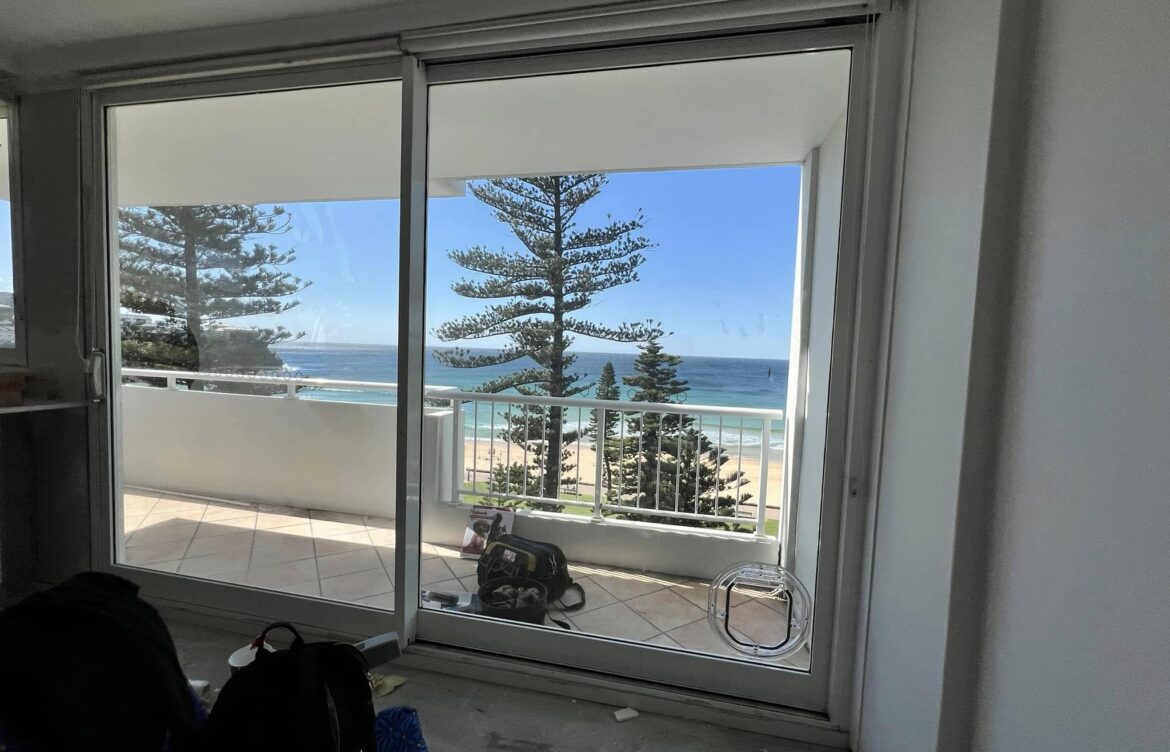
If it's going into glass, what that costs is worth reading first, and toughened or double-glazed panels are a job of their own. For a slider, there are three routes. And if a neighbourhood cat starts using the door once your own pet has mastered it, that has its own fix.
To have the door fitted, our installer directory lists independent specialists by region.
Browse dog doorsBrowse cat doors
Common questions
How long does it take to train a dog to use a dog door?
Most dogs are confident within a week using a staged approach — flap propped open, then lowered gradually. Puppies and food-motivated dogs are often quicker; anxious or older dogs may need two to three weeks.
How do I teach a cat to use a cat flap?
Prop the flap fully open for a couple of days, reward every crossing, then lower it in stages. Never lift the cat through — it creates a lasting negative association.
Why won't my dog use the pet door?
Most often the installation height is wrong, the flap is too small for them, or something on the other side is putting them off. Check all three before assuming it's a training problem.
Can you train an older dog or cat?
Yes, it just takes longer. Watch for joint stiffness — if the step up is uncomfortable, add a low step on both sides or lower the door.
Should I use treats?
For dogs, yes. For cats, scent, a favourite toy or the sound of the food container usually works better than treats.
My pet used it and now refuses. What happened?
Check the four-way lock dial first — it's the most common cause by a wide margin. Otherwise something at the door has changed or startled them; prop it open for a few days and rebuild.